
- Jining Kendray Chemical Technology Co.,Ltd.
- National Service Hotline:
 Your current location:Home < News
Antioxidants play a crucial role in the chemical industry and materials science, as they can effectively prevent or slow down the performance degradation and aging of materials caused by oxidation. Among them, diethylhydroxylamine, as a widely used antioxidant, has attracted much attention for its unique mechanism of action. Do you know the working principle of diethylhydroxylamine antioxidant?
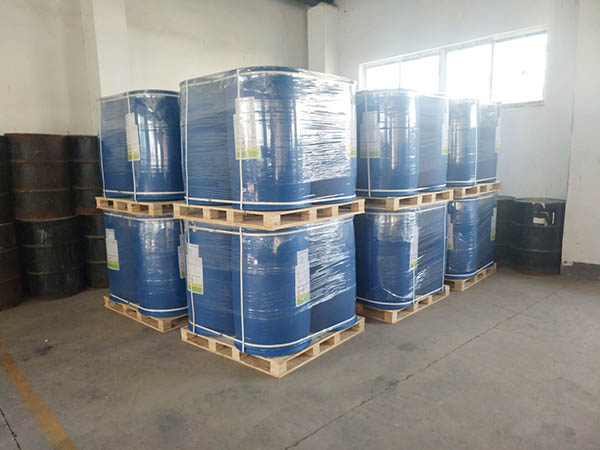
Diethylhydramine is an organic compound with antioxidant properties, often used as a food additive and antioxidant in industrial chemicals. The principle of action of diethylhydroxylamine antioxidant is mainly based on its ability to scavenge free radicals. Free radicals are a type of atom or molecule with unpaired electrons that can trigger chain oxidation reactions in living organisms, leading to harmful processes such as lipid peroxidation and causing damage to the organism. Antioxidants such as diethylhydroxylamine can react with these free radicals to neutralize their activity and prevent or delay further oxidation processes.
The principle of action of diethylhydroxylamine can be divided into the following steps:
1. Capture free radicals: The hydroxyl group (- OH) in diethylhydroxylamine molecules easily attracts and captures free radicals, especially reactive singlet oxygen (O2 • -) and other free radicals.
2. Stable free radicals: Once a free radical reacts with diethylhydroxylamine, it will transfer to antioxidant molecules. The electron cloud of the hydroxylamine group (- NH2) can help stabilize this free radical and prevent it from causing damage to cell membranes or other biomolecules.
3. Termination of oxidation chain: Stable free radicals no longer have the ability to damage cells or lipids, thereby preventing the continuation of the oxidation chain reaction.
4. Conversion into harmless substances: Diethylhydramine and its products after reacting with free radicals may be converted into harmless compounds through biological metabolic pathways and excreted from the body.
Overall, diethylhydroxylamine is a highly effective antioxidant that can capture free radicals, repair damaged cells, and enhance the body's antioxidant capacity, effectively improving the material's antioxidant capacity and stability. The application of diethylhydroxylamine antioxidant has achieved significant results in the chemical industry, materials science, and many related fields, providing strong support for improving material properties and extending service life. With the continuous development of technology, it is believed that diethylhydroxylamine antioxidant will demonstrate its unique advantages and potential in more fields.

