
- Jining Kendray Chemical Technology Co.,Ltd.
- National Service Hotline:
 Your current location:Home < News
Diethylhydramine is a widely used compound in the field of chemistry, which can be used as a reducing agent, vulcanizing agent, fungicide, etc. In many application fields, it is necessary to precisely control the amount of diethylhydroxylamine added to ensure the ideal reaction effect. So what is the exact amount of diethylhydroxylamine added?
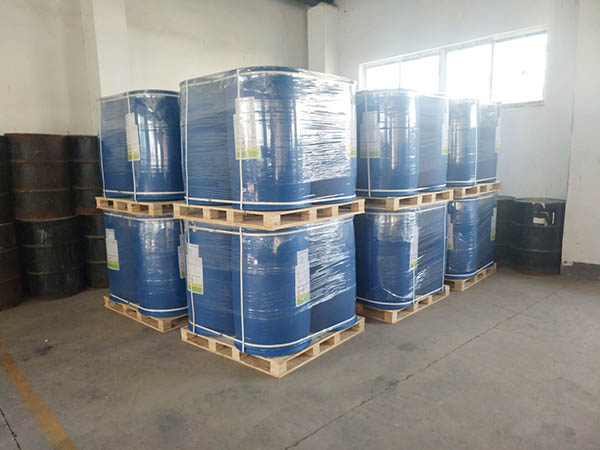
The amount of diethylhydroxylamine added is not a fixed value, but needs to be finely adjusted according to specific application scenarios and purposes. This is mainly because the use of diethylhydroxylamine involves multiple factors, such as reaction conditions, properties of the target compound, product quality, and production process requirements.
The amount of diethylhydroxylamine added is usually determined based on specific application scenarios and desired effects. When determining the amount to be added, the following factors need to be considered:
1. Application scenarios: Diethylhydramine has different requirements for application in different fields. For example, in chemical production, the amount of additives used as stabilizers, antioxidants, or catalysts is usually determined based on the production process and product requirements. In the field of medicine, as a drug ingredient or additive, its dosage needs to follow the drug formula and clinical research data.
2. Required effect: The action and effect of diethylhydroxylamine need to be determined according to actual needs. For example, if the stability of the product needs to be improved, a smaller amount of addition may be required; If it is necessary to improve the performance or effectiveness of the product, a larger amount of additives may be required.
3. Safety: Diethylhydramine has certain toxicity and irritation, and its dosage needs to consider human health and environmental safety. Usually, the safe addition amount needs to be determined based on relevant regulations and standards. In practical applications, it is necessary to follow safety operating procedures and take appropriate protective measures.
4. Experimental data: Determining the amount of diethylhydroxylamine added usually requires experimental data and experience. By conducting experiments, the effects and performance under different addition amounts can be obtained, thereby determining the ideal addition amount. Experimental data can come from laboratory studies or literature reports.
5. Regulations and standards: The amount of diethylhydroxylamine added also needs to comply with relevant regulations and standards. Different countries and regions have different restrictions and requirements on the use of diethylhydroxylamine, which need to be adjusted according to specific circumstances.
Overall, the amount of diethylhydroxylamine added is influenced by various factors, so multiple experiments and optimizations may be necessary in practical applications to find the ideal amount of addition. In addition, attention should be paid to the safety and environmental friendliness of diethylhydroxylamine to ensure that it does not pose any harm to the environment and human health during the addition process.

